If you’re on Maximize Clicks, Google is optimizing for the cheapest traffic, not the most valuable leads. That is why you see impressions and visits but few enquiries. The fix is simple: measure real conversions correctly, move to conversion-focused bidding, and structure your campaigns so Smart Bidding can find qualified demand. This article shows exactly how.
Why Maximize Clicks burns budget
What the algorithm optimizes: cost per click.
What your business needs: cost per acquisition or return on ad spend.
When you chase cheap clicks, the system skews toward low-intent queries, weaker geos, and off-peak auctions. You get traffic, not pipeline. Symptoms you’ll recognize:
- CPC falls while CPA rises
- Lots of search terms that contain “free,” “how to,” “template,” “jobs,” “internship,” brand-irrelevant queries
- High bounce on landing pages and almost no form starts or WhatsApp opens
- Branded clicks cannibalized at the expense of non-brand lead quality
Clicks are a means, not an end. Optimizing for them is like optimizing a restaurant for foot traffic instead of reservations.
What to do instead (overview)
- Measure one primary conversion cleanly
- Switch to Maximize Conversions, then graduate to Target CPA or Target ROAS
- Consolidate campaigns and tighten intent so the model learns fast
- Control waste with negatives, geo, and audiences
- Track quality signals beyond “conversions” to keep the algorithm honest
Each step is below in detail.
Step 1: Nail conversion tracking before you change bidding
Smart Bidding only works if your signal is clean. Do this first.
- Choose one primary conversion: submitted lead form or booked call. Do not count “page views” or “time on site.”
- Thank-you page or event: use a unique thank-you URL or a dedicated “generate_lead” event. Avoid double counting if you auto-redirect to WhatsApp. If you must redirect, delay 2 to 3 seconds so the thank-you fires once.
- Track WhatsApp starts: tag clicks to
wa.meor your chat button as a secondary conversion at first. Promote it to primary only if it reliably equals qualified enquiries. - Use Enhanced Conversions: feed hashed email/phone to improve attribution.
- Deduplicate: if a user fills the form and then taps WhatsApp, count one lead, not two.
- Import offline quality if possible: mark “Qualified” or “Closed Won” back into Google so bidding learns who becomes revenue.
Quality in, quality out. Do not skip this.
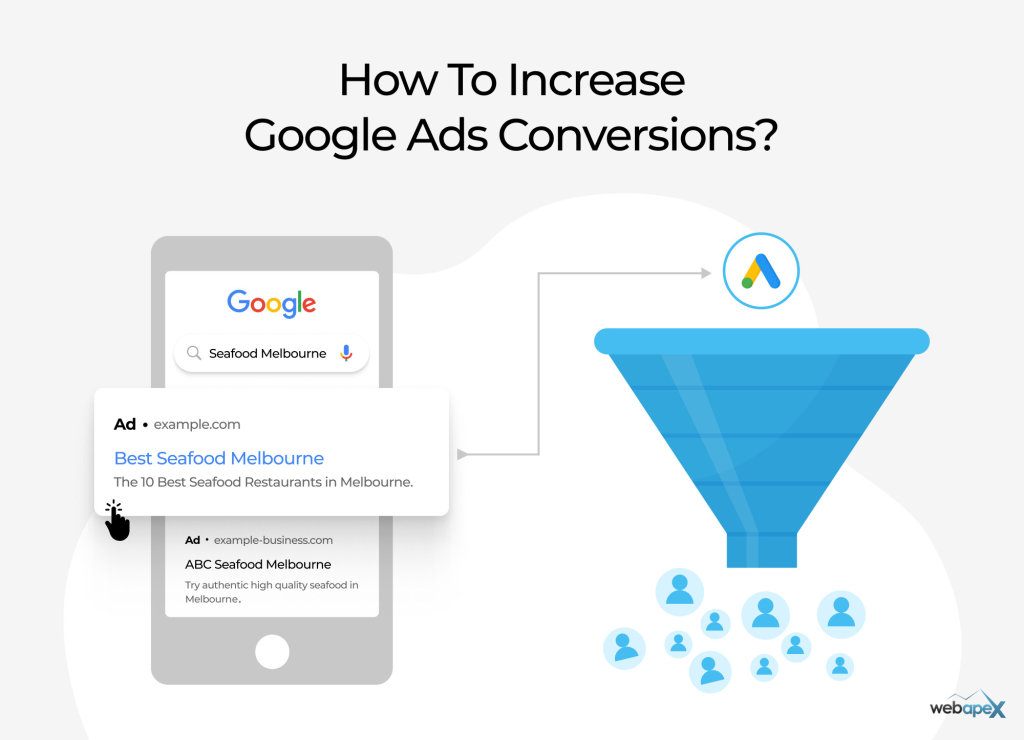
Step 2: Move from Maximize Clicks to Maximize Conversions
How to switch safely
- Duplicate the campaign rather than editing the old one. Keep ad copy, keywords, and locations identical so the only variable is bid strategy.
- Set bid strategy to Maximize Conversions with no target initially. Let the system explore the CPCs needed to win converting auctions.
- Budget sizing: a practical rule is daily budget around 3 to 5 times your realistic target CPA so the system can buy enough attempts to learn.
- Let it stabilize: judge by cost per conversion and lead quality, not CTR or average CPC. Expect CPC to rise while CPA falls.
Once you see stable volume and a CPA you understand, you can graduate to Target CPA.
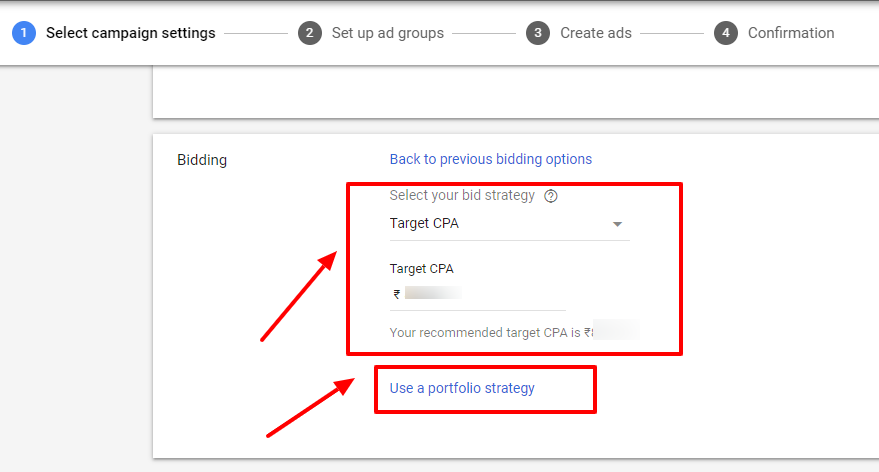
Step 3: Graduate to Target CPA or Target ROAS
- Target CPA (lead gen): set initial tCPA around your recent average CPA or 10 to 20 percent higher. Change in small steps as performance improves.
- Target ROAS (ecommerce or value-based leads): only if you feed real values. For lead gen, use values by lead type or apply value rules by location/device to hint at higher worth segments.
- Portfolio strategies: if several campaigns chase the same goal, let them share a portfolio tCPA so Google allocates spend to the best auctions in aggregate.
Avoid yanking targets up and down day to day. Consistency helps models converge.
Step 4: Structure campaigns for intent and learning
Smart Bidding needs clear boundaries and enough data per boundary.
- Consolidate by theme, not SKAG sprawl: a few tightly themed ad groups beat dozens of thin ones.
- Match types by control level: start with exact and phrase for your core “money terms,” add broad match once tracking is solid to expand reach.
- Locations: use “Presence” not “Presence or interest.” Exclude irrelevant regions.
- Schedule: start full-day, then daypart once you have data.
- Networks: keep Search Partners off until proven. Display off for Search campaigns.
- Audiences as signals: layer in-market and custom intent audiences in Observation to inform bidding without restricting reach.
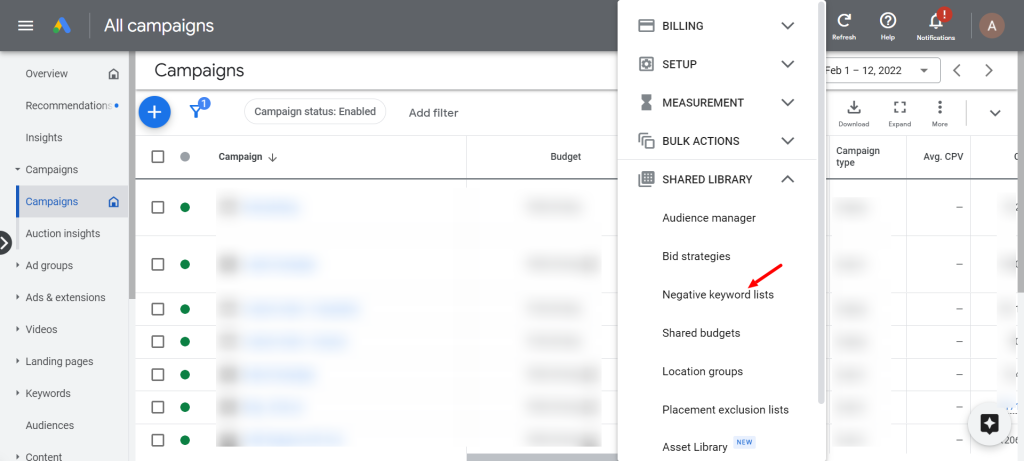
Step 5: Control waste with a negative keyword system
Create buckets and review search terms daily at first, then weekly.
- Information seekers: free, example, definition, tutorial, jobs, internship, salary, DIY
- Mismatched verticals: “restaurant web design” if you do not serve restaurants, or vice versa
- Competitors to exclude: where you don’t want to pay for their brand
- Geos you do not serve: countries, far suburbs
- Misleading homonyms: anything your brand name overlaps with
Add as exact or phrase negatives based on the pattern. Keep a shared negative list across campaigns.
Step 6: Write ads for intent, not slogans
Responsive Search Ads need coverage and clarity.
- Assets: aim for 10 to 15 headlines and 3 to 4 descriptions that echo your keywords and outcomes.
- Pin sparingly: pin your main offer in H1 if you must. Let the rest rotate for coverage.
- Message map: one promise, one proof, one CTA.
- Examples for website design in Singapore
- Headline ideas: “Website Design Singapore,” “Fast, SEO-Ready Builds,” “From S$590 Packages,” “Launch In 14–21 Days,” “Free Mini Audit Today,” “WhatsApp For Quote,” “5.0★ Google Rated,” “See Real Case Studies”
- Descriptions: “Get a conversion-focused site with SEO foundations and analytics. Free mini audit. Keep all accounts and assets.”
Ad strength is not a ranking factor by itself, but more assets give the system more combinations for different queries.
Step 7: Align the landing page with the promise
Bidding cannot rescue a page that breaks the intent chain.
- Distraction-free header: logo, one CTA, optional phone or WhatsApp.
- Hero that answers the query: who it is for, outcome, how to start, and a proof cluster.
- Sticky CTA footer: keep the action one tap away on mobile.
- Form with WhatsApp option: two-step form plus a prefilled WhatsApp fallback below for users who hate forms.
- Speed: fast LCP, no layout shift, images compressed.
- Trust: pricing clarity, named logos, short case snapshots, FAQs.
- Analytics: thank-you page confirmation and micro events for form start, CTA clicks, WhatsApp opens.
Step 8: Monitor the right metrics
Judge the switch by business outcomes.
- Primary: qualified leads, cost per qualified lead, and close rate.
- Directional: cost per conversion, conversion rate, impression share on exact “money terms.”
- Diagnostics: search term quality, location breakdown, new vs returning, device split.
- Quality control: periodically sample leads and tag unqualified ones so you can evaluate model drift.
React with inputs the model can use: negatives, creative, landing page, budgets. Avoid rapid target changes.
Troubleshooting
No spend after switching
Budget too low for the target, intent too narrow, or conversion tracking misconfigured. Raise budget, loosen match types, or confirm the tag fires.
Lots of clicks, zero conversions
Tag broken, thank-you blocked by instant redirects, or the offer/page is misaligned. Fix tracking first.
CPA spiked
Give the strategy a fair runway, then tighten search terms, exclude weak geos, adjust ad copy to repel poor fits, and reduce target CPA in small steps.
Lead quality dropped
Promote “Qualified” imports. Demote low-value conversions from primary. Add value rules to weight better locations or devices.
A simple migration plan you can run this week
Day 1: Audit conversions. One primary, deduped. Add Enhanced Conversions.
Day 2: Duplicate campaign, switch to Maximize Conversions. Budget at 3–5x target CPA.
Day 3: Ship new RSAs with clear promise, proof, CTA.
Day 4: Build or refine the landing page: distraction-free header, sticky CTA, WhatsApp fallback.
Day 5: Create shared negative lists. Layer audiences in Observation.
Day 6: Check search terms, locations, and tag health.
Day 7: Review by CPA and quality, not CTR. Make one meaningful change, then let it run.
The bottom line
Maximize Clicks buys the cheapest curiosity. Conversion strategies buy intent. Measure the right thing, teach the algorithm what a good lead looks like, and keep your structure clean. Your budget will stop evaporating into ghost clicks and start compounding into pipeline.
If you want this implemented end to end, we can help. See Website Design or SEO and ask for a free mini audit.