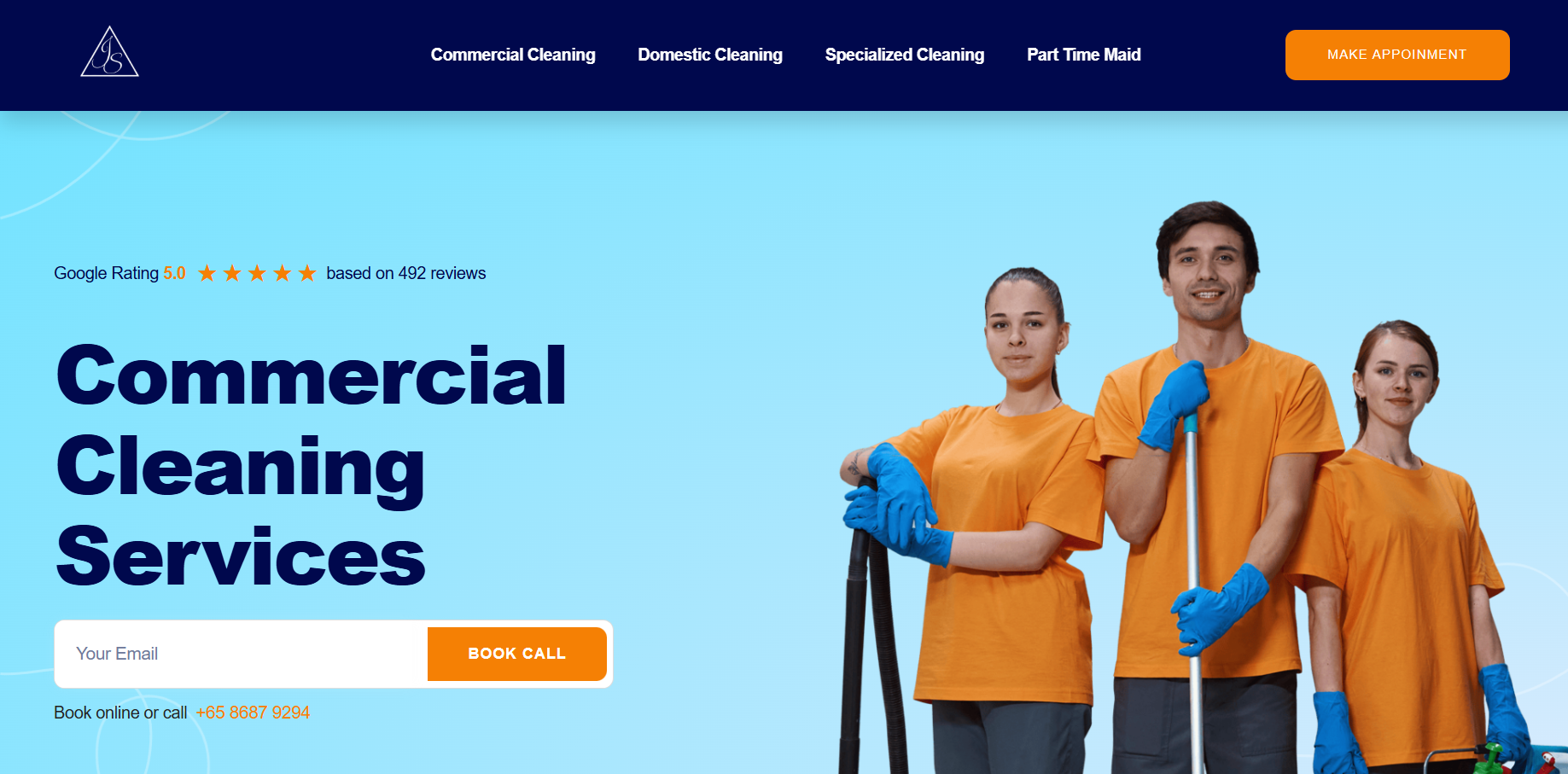
Quick answer: Most websites fall into four practical buckets: Business and Service Based Websites (generate enquiries), E-Commerce websites (sell online), Content websites (earn via content, leads or ads), and Web apps/portals (deliver software or gated functionality). Your best choice depends on your primary goal, not your platform.
Want to checkout the Website Above? Visit our Client’s Website J & S Management
1. Business and Service Based Websites
Primary goal: Turn visitors into enquiries (calls, WhatsApp, forms, bookings).
Who it’s for: Service businesses, professional firms, clinics, gyms, contractors, agencies, SMEs.
Core pages:
- Home (value proposition + proof)
- Services (one pillar page + child service pages)
- About/Team (credibility)
- Case studies/Portfolio (evidence)
- Reviews/Testimonials (trust)
- Contact (clear CTAs, multiple touchpoints)
Must-have features:
- Trust signals: Google ratings, social proof, certifications, media mentions
- Local SEO: NAP consistency, Google Business Profile integration, embedded map
- Conversion UX: Prominent CTAs, click-to-call, sticky contact bar, lead form with minimal fields
- Performance: Fast load times, responsive design, compressed media, clean code
SEO quick wins:
- Map each service to a dedicated page (one keyword theme per page)
- Add FAQ sections on service pages and schema (FAQPage)
- Implement LocalBusiness schema, internal linking from Home → Service pages
- Publish case studies targeting “industry + service + location” long-tails
KPIs: Calls/WhatsApp clicks, form submissions, booking requests, qualified leads.
Need a conversion-focused corporate site? We build fast, SEO-ready business websites at Reputifly Web Development.
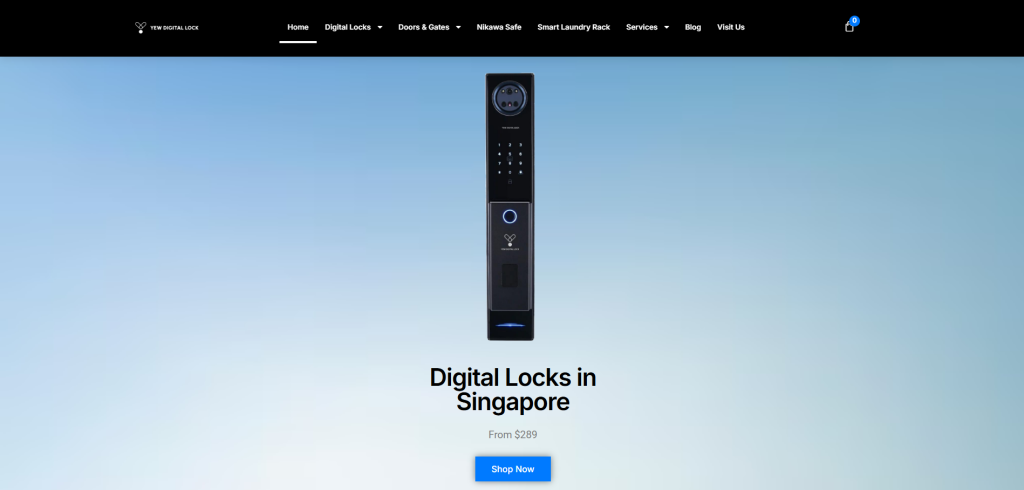
Visit our Client’s Website that Reputifly built within 2 weeks. Check it out Yew Digital Lock
2. E-Commerce Websites
Primary goal: Sell products or services online.
Who it’s for: Brands, DTC stores, retailers, subscription boxes, training/course providers.
Core pages & flows:
- Category → Product → Cart → Checkout → Upsells/Order bumps → Thank-You
- Policy pages (shipping, returns), Trust badges, Payment options, Customer accounts
Must-have features:
- Product detail pages that convert: clear photos, video, benefit-led copy, specs, reviews, FAQs, comparison tables
- Category SEO: keyword-rich headings, unique intro copy (not just grids), internal links
- Checkout optimization: mobile wallets, guest checkout, auto-fill, address validation
- LTV systems: email/SMS flows, cross-sell/upsell, subscriptions, loyalty
SEO quick wins:
- Product & Offer schema (price, availability, rating)
- Faceted navigation done carefully (avoid index bloat → add canonicalization rules)
- Unique category descriptions with internal links to top products
KPIs: Revenue, average order value (AOV), conversion rate (CVR), repeat purchase rate (RPR), CAC vs LTV.

Want to checkout the Website Above? Visit our Client’s Website Gloosphere
3. Content & Resource Websites
Primary goal: Attract and monetize attention—via ads, affiliates, lead gen, or nurturing an audience that eventually buys services/products.
Who it’s for: Blogs, online magazines, knowledge bases, educational resources, media brands.
Core elements:
- Topic clusters (pillar pages + supporting articles)
- Clean reading UX (typography, spacing, table of contents, jump links)
- On-page CTAs to lead magnets or services
- Author pages and About (E-E-A-T)
Must-have features:
- Information architecture: categories/tags that map to keyword clusters
- Schema: Article, HowTo, FAQ, Breadcrumb
- Internal linking system: every new article links both up (pillar) and sideways (related)
- Content velocity & updates: schedule for publishing and refreshing
SEO quick wins:
- Build pillar pages (e.g., “Local SEO Guide for Clinics in Singapore”) and link in supporting posts
- Target long-tail questions (People Also Ask) and add an FAQ section per article
- Refresh winners every 3–6 months (update stats, screenshots, internal links)
KPIs: Organic sessions, ranked keywords, email signups, time on page, assisted conversions.
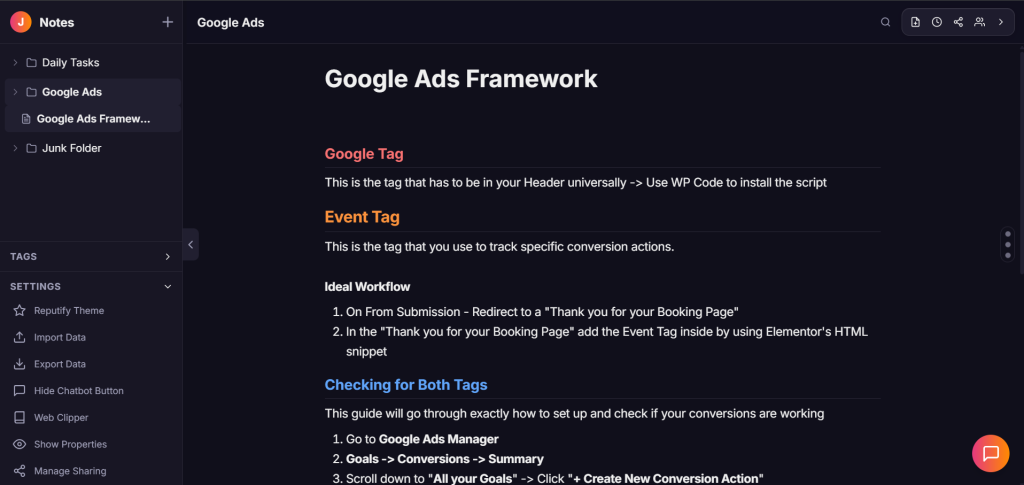
Reputifly AI Note Taker is the Top Productivity Application rivaling Notion with Agentic AI integration within your Notes and Workflow, Offline PWA Access and Real Time Collaboration Features. Build by Reputifly
4. Web Applications & Software (SaaS/Booking/Client Hub)
Primary goal: Deliver functionality—software, calculators, booking engines, user dashboards, gated content.
Who it’s for: SaaS products, appointment-based businesses, membership sites, client portals, tools/calculators.
Core features:
- Authentication, roles/permissions, secure data storage
- Dashboard, usage analytics, notifications, billing/subscriptions
- API integrations (payments, calendars, CRM, marketing tools)
- Performance/speed, reliability, error logging
SEO quick wins:
- Create public marketing site with SEO pages (use-cases, features, industries, pricing, comparisons)
- Publish interactive tools/calculators that can earn links and rank for problem-aware keywords
- Add programmatic “alternative/comparison” pages (e.g., “X vs Y for SMEs”)
KPIs: Sign-ups, activations, WAU/MAU, retention/churn, expansion revenue.
Building a booking system, portal, or SaaS MVP? Our team ships robust web apps and front-ends. Explore Reputifly Web Development.